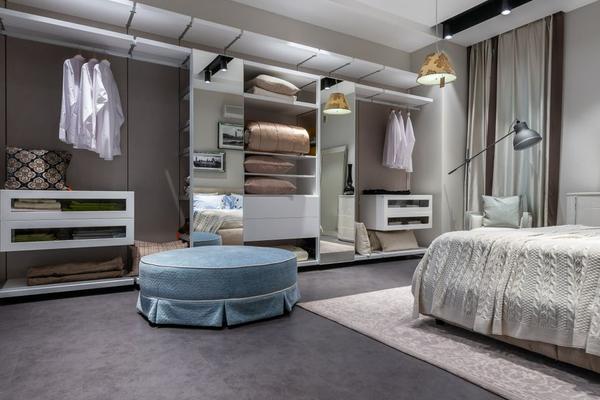
Bedroom storage is becoming less about hiding every centimetre behind matching doors and more about choosing pieces that feel flexible and personal. Fitted wardrobes have not fallen out of favour: in space-conscious UK homes, they solve awkward alcoves and sloping ceilings well. The useful comparison is permanence versus adaptability.
A freestanding wardrobe can bring warmth and character. Fitted storage can create a calm, streamlined wall with strong capacity. The right choice depends on the room’s shape, how long you expect to stay, what you need to store and whether the furniture should disappear or become part of the visual story.
What is the real difference?
Freestanding wardrobes can be moved, sold, repainted or repositioned. They range from flat-pack designs to solid timber armoires and vintage storage furniture. They sit within the room rather than becoming part of its architecture, creating a softer, more collected look.
Fitted storage is designed for a particular wall or ceiling line. It may run from floor to ceiling and include rails, drawers, shelves and lighting behind coordinated doors. Its main advantage is efficiency: it can use spaces that standard furniture cannot reach.
Where freestanding wardrobes work best
You want flexibility
Renters, frequent movers and homeowners planning another renovation often benefit from freestanding storage. A wardrobe can move when the bed changes position, transfer to a guest room or travel to a new home. That makes it one of the most practical fitted wardrobe alternatives when permanent carpentry feels too restrictive.
You prefer a layered bedroom
A freestanding piece introduces shape, material and history. An old pine wardrobe, painted cabinet or mid-century chest can stop a neutral bedroom from feeling like a showroom. This suits relaxed interiors where furniture is deliberately mixed rather than purchased as one matching suite.
For balance, repeat one detail elsewhere. A dark timber wardrobe might connect with a picture frame or bedside table, while a painted armoire could echo the wall colour. When exploring how to mix vintage and modern furniture, repetition rather than exact matching creates coherence.
Your needs may change
Freestanding storage ideas can be built in stages. You might start with one wardrobe, then add a low chest, blanket box or narrow rail. This works well in a child’s room, first home or bedroom that doubles as an office. Separate pieces allow the plan to evolve without replacing an entire installation.
Where fitted storage earns its place
The room has awkward architecture
Chimney breasts, alcoves, sloping ceilings and uneven corners can leave frustrating gaps around standard wardrobes. Fitted cabinetry turns those areas into useful storage and reduces the visual clutter caused by several separate pieces. In a loft bedroom, low cupboards beneath the eaves may provide more capacity than a tall wardrobe on the only straight wall.
You need maximum capacity
Floor-to-ceiling storage uses the upper part of the room for suitcases, spare bedding and seasonal clothes. Internal fittings can be tailored with double hanging, long hanging, drawers and adjustable shelves.
This can justify the higher upfront cost because you are paying for measurement, installation and a layout designed around your possessions. Before ordering, list what you own. A fitted wall with too much hanging space and too few drawers is still inefficient.
You want a quieter background
Fitted doors painted to match the walls can make a busy room feel calmer. Simple panels and consistent lines allow the bed, artwork or lighting to become the focus. This is useful in a compact bedroom where several freestanding pieces would interrupt sightlines.
Cost, disruption and long-term value
Freestanding wardrobes usually offer the lower entry cost and can be purchased one piece at a time. Delivery and assembly may be the only disruption, though large items require access planning. Measure stair turns, doorways, ceiling height and skirting depth, not just the final wall.
Fitted storage generally requires a larger budget and more planning. Installation may involve removing skirting, working around uneven walls and redecorating. It can make a property more appealing when it solves an obvious storage problem, but it should not be treated as a guaranteed way to recover the full installation cost when selling.
Maintenance differs too. A damaged freestanding piece can often be repaired or replaced independently. With fitted cabinetry, ask whether doors, hinges and internal components use replaceable standard sizes.
Could a mixed approach be better?
Many bedrooms benefit from combining both systems. A shallow fitted cupboard can handle everyday clothes while a freestanding chest adds character and flexible drawer space. Alternatively, one vintage wardrobe can become the focal point while fitted cupboards occupy an awkward recess.
An open shelving bedroom can also work as part of the mix, but it needs editing. Open shelves are best for attractive boxes, books, folded knits or frequently used items. Pairing them with closed storage prevents the room from feeling untidy.
Consider a box room measuring roughly three metres by three metres. Filling one wall with deep fitted wardrobes may maximise capacity but leave the bed feeling enclosed. A narrower freestanding wardrobe, low chest beneath the window and under-bed drawers could preserve circulation. Mark furniture depth and door swings on the floor with masking tape before buying. This test often reveals whether maximum storage is reducing usability.
Questions to ask before deciding
Choose freestanding storage when flexibility, character and a lower initial commitment matter most. Choose fitted storage when awkward architecture, high storage demand or a seamless finish is the priority. Check wall condition, ventilation and access to sockets. Tall freestanding wardrobes should be securely anchored, especially with children, while cabinetry against a cold external wall may need airflow to reduce damp risk.
Review small bedroom layout ideas and measure the clear walking route around the bed. You may also want to compare bedroom colour schemes before selecting wardrobe finishes, especially when storage will occupy a full wall.
Frequently asked questions
Are fitted wardrobes always better for small bedrooms?
No. They can use awkward space efficiently, but a deep floor-to-ceiling run may overwhelm a narrow room. A slim freestanding wardrobe, under-bed storage and a low chest can sometimes create better flow.
Do freestanding wardrobes waste space?
They may leave gaps above or beside the unit, although those gaps are not automatically wasted. The space above can hold boxes, while side gaps may preserve ventilation, curtain clearance or cleaning access.
Can fitted wardrobes be removed later?
Yes, but removal may damage walls, flooring or skirting and requires redecoration. Because the units are made for a specific space, they may have limited reuse value elsewhere.
Which option is more sustainable?
It depends on materials, quality and lifespan. A durable freestanding wardrobe can be moved, repaired and resold. Well-made fitted storage can also be sustainable when it remains useful for years and uses responsibly sourced, replaceable components.
Choosing storage that suits the room
The best bedroom storage is not necessarily the one that holds the greatest volume. It is the solution that supports daily routines without making the room feel cramped or impersonal. Freestanding wardrobes offer adaptability and character; fitted storage offers precision and visual calm. Measure carefully, plan around what you own and choose the degree of permanence that fits your home rather than following a trend for its own sake.