Why Smart Hubs Still Matter in 2026
A few years ago, people were quietly wondering whether smart hubs were becoming outdated. After all, plenty of bulbs, plugs, cameras, and speakers now connect directly through Wi-Fi or Bluetooth. But in real homes, things are rarely that neat. One room has smart lights, another has a motion sensor, the thermostat uses one app, the lock uses another, and suddenly the “smart” home feels more like a drawer full of remote controls.
That is why the best smart hubs for home automation still matter in 2026. A good hub works like the calm middle of the system. It helps different devices talk to each other, keeps routines running smoothly, and reduces the need to open five separate apps just to turn off the house at night.
What a Smart Hub Actually Does
A smart hub is not just another gadget sitting near the router. Its real job is coordination. It connects devices that use different communication styles, including Wi-Fi, Zigbee, Z-Wave, Thread, Bluetooth, and Matter. Once those devices are connected, the hub can run automations such as turning on hallway lights when a door opens, lowering the thermostat when nobody is home, or locking the front door after bedtime.
The best hubs also improve reliability. Cloud-based automations can be convenient, but local control is often faster and more dependable. If an automation runs inside the home instead of waiting for a distant server, the lights usually respond more quickly, and some routines may still work even if the internet goes down.
Matter and Thread Changed the Conversation
Matter was created to make smart home devices work more easily across platforms, and Thread was designed as a low-power mesh network for connected devices. Together, they sound like the answer to years of smart home confusion. In practice, they help a lot, but they do not magically erase every compatibility problem.
A 2026 report from The Verge noted that Matter is still progressing, but real-world platform support remains uneven across brands and ecosystems. That means the hub you choose still matters, even in a Matter-friendly home. A device may technically support Matter, but your experience can still depend on the app, hub, software version, and device category involved.
Samsung SmartThings for a Balanced Mixed Home
Samsung SmartThings remains one of the easiest recommendations for people who want broad compatibility without going too deep into technical setup. It works well for mixed homes where lights, sensors, plugs, appliances, and cameras may come from several brands. For many households, that flexibility is more useful than chasing the most advanced feature on paper.
SmartThings is especially helpful if you want a simple app, clear routines, and support for common smart home standards. The Aeotec Smart Home Hub, which runs on the SmartThings platform, is often used by people who still rely on Zigbee and Z-Wave devices. That matters because many homes already have older sensors and switches that still work perfectly well. Replacing them just to follow a new standard is not always sensible.
Home Assistant for Serious Control
Home Assistant is the choice for people who want their smart home to feel truly personal. It is powerful, flexible, and highly customizable. Home Assistant Green made the platform more approachable by offering a ready-made device instead of requiring users to build their own setup from a Raspberry Pi or mini PC.
This is not the most casual option, and that is part of the point. Home Assistant is excellent when you want detailed automations, local control, dashboards, energy tracking, and deep integrations across many brands. The tradeoff is that it asks for more patience. You may spend more time adjusting settings, adding integrations, and learning how devices behave. For some users, that is enjoyable. For others, it is simply too much.
Hubitat Elevation for Local Automation
Hubitat has earned a loyal following because it focuses strongly on local control. The Hubitat Elevation C-8 Pro supports Matter, Zigbee, Z-Wave, Bluetooth, LAN connections, and a wide range of devices, according to Hubitat’s own product details. Its appeal is not flashy design or voice assistant charm. It is about speed, privacy, and keeping automations inside the home as much as possible.
This makes Hubitat a strong fit for people who care about reliability more than visual polish. If you want your motion lighting, locks, switches, and sensors to keep behaving consistently, even when the internet is having a bad day, Hubitat deserves attention. It may feel less beginner-friendly than SmartThings, but it gives careful users a lot of control.
Apple HomePod Mini and Apple TV for Apple Homes
For Apple households, the HomePod mini and Apple TV 4K are natural smart home hubs. Apple says HomePod mini and HomePod automatically become home hubs when set up, and Matter accessories require a home hub in the Apple Home app. Thread-enabled Matter accessories need a Thread-enabled hub such as HomePod mini or a compatible Apple TV 4K.
The biggest advantage is simplicity. If your home already runs on iPhones, Apple Watches, and Siri, the setup feels familiar. Apple Home is clean, privacy-focused, and comfortable for everyday routines. The limitation is that Apple’s smart home world can feel narrower than Home Assistant or SmartThings when dealing with unusual devices. It is best for people who prefer a tidy system over endless tinkering.
Amazon Echo Hub for Alexa-Centered Homes
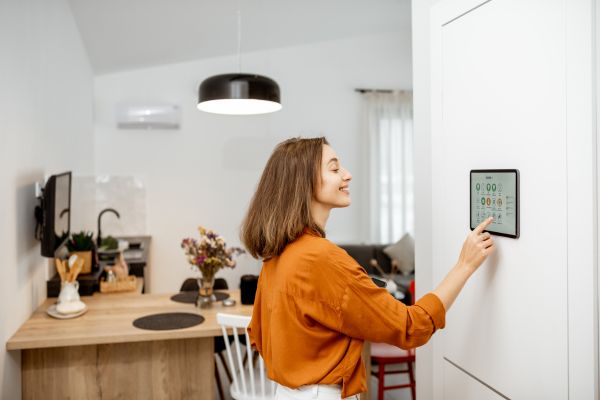
The Amazon Echo Hub is a practical option for homes already built around Alexa. Its wall-mounted touchscreen style makes it useful as a central control panel for lights, cameras, thermostats, and routines. Instead of reaching for a phone, you can walk up to the panel and control the home more directly.
Alexa households often value voice control, and Amazon’s ecosystem still has wide device support. The Echo Hub makes sense if you use Ring devices, Echo speakers, smart plugs, and Alexa routines every day. It may not satisfy users who want deeper local automation, but for straightforward daily control, it keeps the smart home visible and easy to manage.
Aqara Hub M3 for Sensors, Matter, and Infrared Control
The Aqara Hub M3 is one of the more interesting modern hubs because it combines several roles in one box. Aqara lists support for Wi-Fi, Zigbee/Thread, Bluetooth 5.1, and Power over Ethernet in the Hub M3 specifications. It also works as a Matter bridge and includes infrared control, which can be useful for older air conditioners, TVs, and other remote-controlled devices.
Aqara is especially strong for homes built around sensors, switches, curtains, door locks, and compact automation devices. The M3 is a thoughtful option for people who want Matter support but still have plenty of Zigbee devices in the mix. As with many ecosystems, the best experience usually comes when most of the devices are from the same family.
Choosing the Right Hub for Your Home
The best hub is not always the most expensive or most powerful. It is the one that fits the way your home already works. If you want easy mixed-brand control, SmartThings is a safe starting point. If you want deep customization, Home Assistant is hard to beat. If local reliability is the priority, Hubitat feels serious and steady. If your family uses iPhones every day, Apple’s home hubs make sense. If Alexa is already part of daily life, Echo Hub keeps things simple. If sensors and Matter bridging are your focus, Aqara M3 has a strong place.
Before buying, look at the devices you already own. Check whether they use Zigbee, Z-Wave, Wi-Fi, Thread, Matter, or a brand-specific bridge. Also think about who will use the system. A technically perfect hub is not perfect if nobody else in the house understands it.
A Smarter Home Needs a Steady Center
The best smart hubs for home automation in 2026 are not just about connecting devices. They are about making the home feel less scattered. A good hub turns separate gadgets into routines that make sense: lights that follow movement, locks that match schedules, sensors that quietly protect the house, and energy controls that work in the background.
The smart home is still not completely universal, and maybe that is the honest truth of 2026. Matter and Thread are helping, but ecosystems still have personalities. Choose the hub that matches your devices, your patience, and your daily habits. When the hub fits well, home automation stops feeling like a project and starts feeling like part of the house.