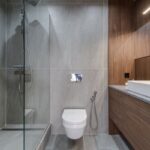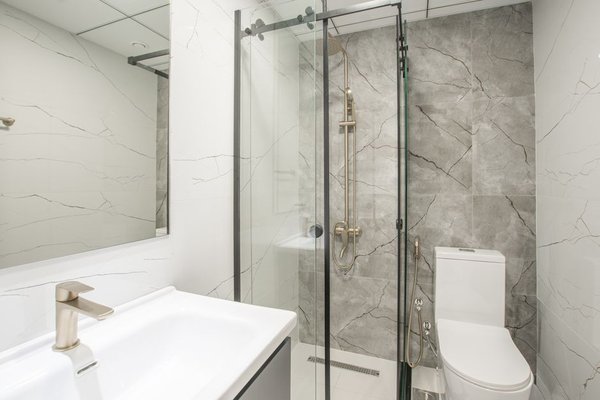
A concealed cistern hides the toilet’s water tank inside a wall, furniture unit or purpose-built boxing. The finish looks simple, but the crucial decisions happen before the wall is closed: how the tank is supported, how it will be serviced and which controls fit.
This concealed cistern guide explains those hidden details for wall-hung and back-to-wall toilets. These installations can look similar while requiring different support and maintenance arrangements.
What sits behind a concealed toilet cistern?
Like an exposed tank, a concealed toilet cistern has a fill valve, flush mechanism and overflow arrangement. Pressing the flush plate releases water into the pan; the inlet valve then refills the cistern.
Hiding these components does not eliminate wear. A faulty seal, slow-filling valve or continuous trickle into the bowl still needs investigation. Easy replacement of parts and a documented service route matter more than shaving a little depth from the wall.
Which concealed cistern type suits your toilet?
Back-to-wall toilet with a separate cistern
A back-to-wall pan stands on the floor while its cistern sits inside boxing, a suitable wall cavity or bathroom furniture. The floor supports the toilet’s weight, so a wall-hung support frame is generally unnecessary. Secure cistern fixings, sound connections and service access remain essential.
This option often suits renovations where the existing waste outlet works with a floor-standing toilet. A separate guide to back-to-wall toilets can help with the visible layout decision.
Wall-hung toilet with a frame system
A wall-hung pan attaches to an engineered toilet frame system secured to suitable building structure. The frame supports the pan and commonly incorporates the cistern and pipe connections. Ordinary plasterboard alone cannot provide that support.
Frames differ in height, depth, fixing requirements and intended wall construction. Choose a system specified for the actual building and pan, rather than buying a frame solely because it fits on a product photograph.
Low-height and slimline options
Low-height systems can work below a window or shelf. Slimline cisterns can reduce boxing depth, although their servicing arrangements and flush-plate choices may differ from standard models. Compact dimensions are useful only if the plumbing and access still fit.
Plan the access opening before tiling
On many modern systems, removing the flush plate reveals a service opening for the fill and flush valves. Geberit, for example, designs removable internal components around this access point. Nevertheless, confirm the exact model’s maintenance instructions: not every repair can be completed through a small opening.
A separate cistern access panel may be needed where custom boxing or furniture conceals connections that cannot be reached through the plate. Make it large enough to inspect and service the required fittings without destroying tilework or fixed cabinetry.
Before enclosing anything, ask three questions: Can the water supply be isolated? Can valves be removed through the opening? Will the access cover remain removable after the finished tiles and countertop are installed?
In England and Wales, water fittings regulations require a servicing valve on the inlet pipe adjacent to a WC flushing cistern. Requirements elsewhere may differ; your installer should check the applicable rules.
The flush plate must match the cistern
A flush plate is not merely decorative. It operates the internal mechanism, sometimes through rods, cables or another manufacturer-specific arrangement. Many cisterns provide dual-flush operation, although the actual flush volumes and adjustments depend on the cistern and compatible pan.
Two plates can look interchangeable yet use different mounting and activation systems. Confirm compatibility by model or product code before choosing a finish. Also check where the plate is allowed to sit: vertical wall and horizontal shelf mounting are not universally interchangeable.
What installation should involve
Measure the finished wall position, not just the empty cavity. Wallboard, waterproofing and tiles all affect the final depth, while the pan connections and flush-plate opening need to align precisely.
A sensible installation sequence establishes the pan and cistern compatibility, checks dimensions and waste-pipe position, fixes the frame or tank to appropriate supports, connects the water supply, then tests for leaks and flushing performance before closing the wall.
For a wall-hung toilet, correct anchorages and structural fixings are essential. Follow the manufacturer’s instructions, protect waterproofing around penetrations and use a qualified installer where structural or plumbing work exceeds your experience. Photograph the completed hidden assembly before covering it.
A real renovation decision
Imagine replacing a floor-standing toilet beneath a low bathroom window. A standard wall-hung frame might reach above the sill; a low-height frame could solve that problem. But if the waste pipe cannot move easily or the available depth is limited, a back-to-wall pan and compact concealed cistern may be the simpler solution.
Draw the finished boxing dimensions, position of the flush plate and maintenance access on the same sketch. Reviewing bathroom layout measurements before ordering helps catch conflicts that are expensive to change after tiling.
What happens when a concealed cistern develops a fault?
A constant trickle into the pan can indicate debris or a damaged flush-valve seal. Slow filling may come from an inlet-valve or water-supply issue. Weak flushing may reflect incorrect settings, a restriction or incompatibility between components.
Identify the cistern model first, then follow its servicing instructions. Do not force off an unfamiliar flush plate. If you see water escaping outside the enclosure, isolate the supply where safe and seek prompt professional help; hidden leaks can damage the surrounding wall.
Keep the installation manual and component numbers. A photograph showing the cistern, isolation point and connections behind the finished surface can save a plumber considerable investigative work later.
Frequently asked questions
Can a concealed cistern be repaired without removing tiles?
Often, yes. Many modern models allow routine valve service through the removable flush plate. Inaccessible pipework or poorly planned enclosures may still need opening.
Does a wall-hung toilet need a support frame?
It needs a manufacturer-approved structural support arrangement. A purpose-designed frame is common; plasterboard alone cannot safely carry the load.
Can any flush plate be fitted to any cistern?
No. The plate must suit the cistern’s actuation mechanism and compatible range. Choose the finish after checking that match.
Are concealed cisterns difficult to maintain?
Not necessarily. Routine servicing can be straightforward when the installation has a suitable access opening and replacement parts remain available.
A neat finish should still be serviceable
The best concealed cistern installation is one you barely notice until maintenance is needed. Match the pan, cistern, frame and flush plate; confirm structural and plumbing requirements; and check service access before the final wall finish goes on. These practical choices protect both the bathroom’s appearance and its long-term usability.