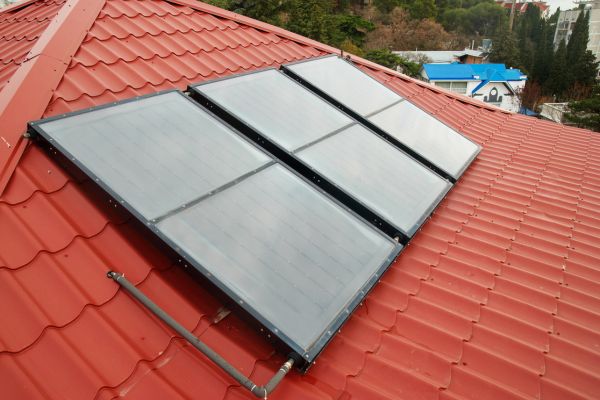
Hot water is one of those everyday comforts most of us don’t think about—until it’s suddenly unavailable or painfully expensive. As energy costs rise and conversations around sustainability grow louder, many homeowners are quietly rethinking how that hot water gets produced. This is where solar water heating systems step into the spotlight, not as a futuristic concept, but as a practical, time-tested solution that’s already working on rooftops around the world.
Unlike flashy solar technologies that often dominate headlines, solar water heating is remarkably straightforward. It uses the sun’s energy to heat water directly, reducing reliance on electricity or gas. The simplicity is part of the appeal, but the long-term benefits run much deeper than that.
Understanding How Solar Water Heating Systems Work
At their core, solar water heating systems are designed to capture sunlight and convert it into heat for domestic water use. The system typically includes solar collectors, a storage tank, and a circulation mechanism. Sunlight hits the collectors—usually installed on a roof or open area—and heats the fluid or water inside them. That heat is then transferred to the water stored in a tank, ready to be used for showers, washing, or general household needs.
There’s no complex electronics involved in most setups. Many systems rely on basic thermodynamics: hot water rises, cold water sinks. This natural circulation allows some systems to operate without pumps, making them both energy-efficient and reliable.
Why Solar Water Heating Feels Surprisingly Practical
Solar energy often gets framed as a big, ambitious investment, but solar water heating systems feel different. They solve a very specific, very common problem—heating water—without trying to overhaul an entire household’s energy infrastructure.
One of the most noticeable advantages is consistency. Water heating is a daily necessity, unlike electricity usage that can fluctuate wildly. Because of this steady demand, solar water heating systems tend to deliver predictable savings over time. Even in regions that aren’t sunny year-round, modern systems are designed to perform efficiently under diffuse light and cooler conditions.
Another understated benefit is durability. With fewer moving parts than many renewable technologies, these systems often last decades with minimal maintenance. For homeowners who value reliability over novelty, that matters.
The Environmental Impact Beyond the Obvious
It’s easy to say that solar water heating systems are “good for the environment,” but that phrase often feels vague. In practical terms, heating water accounts for a significant portion of household energy use. Reducing that demand directly lowers carbon emissions, especially in homes that rely on fossil fuels.
What’s interesting is how quietly this impact accumulates. Unlike switching to electric vehicles or installing full solar power systems, solar water heating doesn’t dramatically change daily habits. You still take hot showers. You still wash dishes the same way. The difference happens behind the scenes, where fewer resources are burned to meet the same needs.
Over time, this subtle shift contributes to a measurable reduction in household energy footprints, without requiring lifestyle compromises.
Different Types of Solar Water Heating Systems
Not all solar water heating systems are built the same, and understanding the variations helps explain why they can work in such diverse climates.
Active systems use pumps to circulate water or heat-transfer fluids between the collectors and the storage tank. These systems offer more control and flexibility, particularly in larger homes or colder regions.
Passive systems rely on natural circulation and gravity. They’re simpler, often more affordable, and surprisingly effective in warm or moderate climates. Their lack of mechanical components also makes them appealing in areas where maintenance access might be limited.
Then there’s the choice between direct and indirect systems. Direct systems heat household water directly in the collectors, while indirect systems use a separate fluid to transfer heat. The latter is especially useful in freezing conditions, where direct exposure could damage the system.
Installation: What the Process Actually Looks Like
The idea of installing solar equipment can feel intimidating, but solar water heating installation is typically less disruptive than people expect. The process starts with evaluating roof orientation, available sunlight, and household water usage. South-facing roofs with minimal shading tend to be ideal, though ground-mounted options are also possible.
Once the collectors are positioned, the system is connected to a storage tank, often located near existing water heaters. In many homes, solar water heating systems work alongside conventional heaters rather than replacing them entirely. The traditional heater acts as a backup, ensuring hot water availability during extended cloudy periods.
Installation timelines vary, but many projects are completed within a few days. The most time-consuming part is often planning rather than physical installation.
Living With a Solar Water Heating System
After installation, daily life doesn’t change much—and that’s kind of the point. The system quietly does its job, heating water whenever sunlight is available. Some homeowners report becoming more aware of their water usage, not because they have to, but because they’re curious about how much energy the sun is providing.
Seasonal differences are noticeable. In summer, systems often produce more hot water than a household can use. In winter, the contribution may be smaller, but still meaningful. Over the course of a year, the balance tends to even out in a way that feels reassuring rather than limiting.
Maintenance is generally minimal. Occasional inspections and, in some cases, fluid replacement are usually enough to keep the system running smoothly.
Cost Considerations Without the Sales Pitch
It’s impossible to talk about solar water heating systems without acknowledging cost, but the conversation doesn’t have to feel transactional. Initial installation costs vary based on system type, size, and location. However, these systems are often more affordable than full solar power installations.
What makes them particularly interesting is the long-term perspective. Because water heating is a constant need, the energy savings accumulate steadily. Over time, many homeowners find that the system essentially pays for itself, especially in areas with high energy prices.
Government incentives and local regulations can also influence affordability, though those details depend heavily on location and change over time.
Why Solar Water Heating Often Gets Overlooked
Despite its practicality, solar water heating doesn’t always get the attention it deserves. It lacks the visual drama of large solar panel arrays and doesn’t promise complete energy independence. Instead, it offers something quieter: efficiency in a specific, essential part of daily life.
That understated nature may actually be its strength. For people interested in sustainability without wanting to overhaul their homes or routines, solar water heating systems provide a balanced, approachable option.
A Thoughtful Conclusion on Solar Water Heating Systems
Solar water heating systems sit at an interesting intersection of old-school simplicity and modern environmental awareness. They don’t demand dramatic lifestyle changes or constant attention. Instead, they work quietly in the background, turning sunlight into something we all rely on every day.
As conversations about energy efficiency become more grounded and practical, these systems feel less like an alternative and more like a logical step forward. They remind us that meaningful change doesn’t always come from grand gestures. Sometimes, it comes from improving the systems we use every single day, starting with the water that flows from our taps.